Muslim Parenting Matters
No. 1 Classical Islamic Parenting Resource for British Muslim Homes
Retired Islamic Scholar Reveals a 5-Step Classical Method That Helps British Muslim Parents Raise Obedient, Connected Children — Without Anger, Threats, or Daily Battles
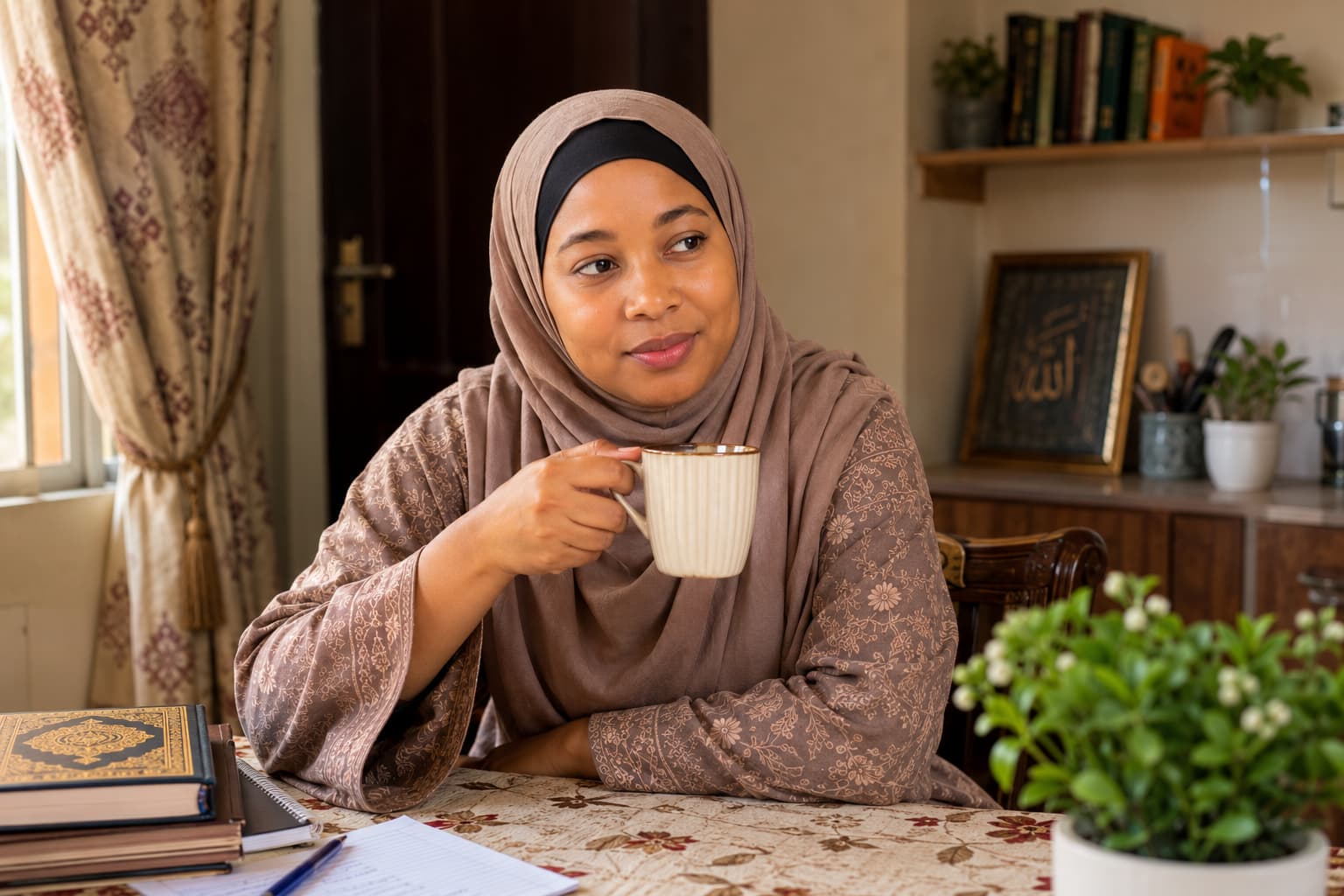
Fatimah — British-Nigerian Muslim mother, East London. Author of Muslim Parenting Matters.
You know the moment I am talking about.
You call your child's name from the kitchen. Once. Twice. Three times. You walk to their door, knock, and they finally look up from their phone with an expression that tells you everything you are afraid to know.
Not anger. Not even defiance.
Just... distance.
And that distance is somehow worse than a shouting match would be. Because you cannot argue with absence. You cannot discipline your way back from a child who has already quietly decided that you are not worth the energy.
When did this happen? He used to come to me with everything. He used to ask me to read Qur'an with him before bed.
But that was before secondary school. Before the friendship group that doesn't fast. Before he started referring to the mosque as "that place you make me go." Before the version of your child that you raised started being replaced — slowly and quietly — by someone you do not fully recognise.
You have tried the conversations. The ones where you sit down with your best patient voice and explain — again — why Islam matters, why the home rules exist, why you need him to at least try. He listened politely. Nothing changed.
You have tried consequences. Phone taken away. Screen time restricted. A ban on the friends you don't fully trust. He complied for a week. Then went back to exactly where he was before.
Am I too strict? Am I not strict enough? Is this just what teenagers are like here, in this country, or is something actually wrong?
You have watched other British Muslim families from the outside and wondered what they are doing differently. The ones whose children still seem connected. Whose teenagers still pray without being reminded. Whose homes feel warm instead of tense.
You have bought mainstream parenting books that talk about "attachment" and "autonomy" in language that makes no reference to Allah, to deen, to the specific impossible tension of raising a Muslim child in a British secondary school where his entire social world pulls against everything you are trying to build at home.
You have sat in the car after school pickup, watching your child walk towards you with his hood up and his eyes down, and felt a grief you don't know how to name. Because he is not gone. He is right there. But he is not with you.
This is not what I imagined. This is not who I raised.
And the worst part? You are doing everything you know how to do. You are not a bad parent. You are trying. And somehow that makes it lonelier — because if you were doing something obviously wrong, you could fix it. But you cannot fix something you cannot see.
If any part of what I have just written feels like I have been sitting in your living room watching your life — drop everything you are doing now and listen to every word I am about to say.
This method did not come from a parenting coach. It did not come from a TEDx talk or a bestselling book or a weekend workshop in a Central London hotel.
It came from men who lived over nine hundred years ago. Men who studied the human soul the way modern neuroscientists study the brain — with rigour, with humility, and with a precision that still holds today.
Al-Ghazali. Ibn al-Qayyim. Ibn al-Jawzi. Ali ibn Abi Talib. These scholars wrote about childhood development, about the architecture of a child's conscience, about exactly why some correction methods damage children while others repair them — centuries before any modern parenting framework existed. Their wisdom has been sitting in Islamic libraries for a thousand years. Quietly waiting for Muslim parents who needed it most.
Hi. My name is Fatimah.
The first thing you should know about me is that I am not a child psychologist. I am not an Islamic scholar. I am not a parenting expert with a qualification on my wall.
I am a British-Nigerian Muslim mother from East London who spent three years watching my son Abdurrahman slowly disappear from me — and who found the answer in the most unlikely place, on a trip back to Lagos to visit my mother's family, in a conversation I almost didn't have.
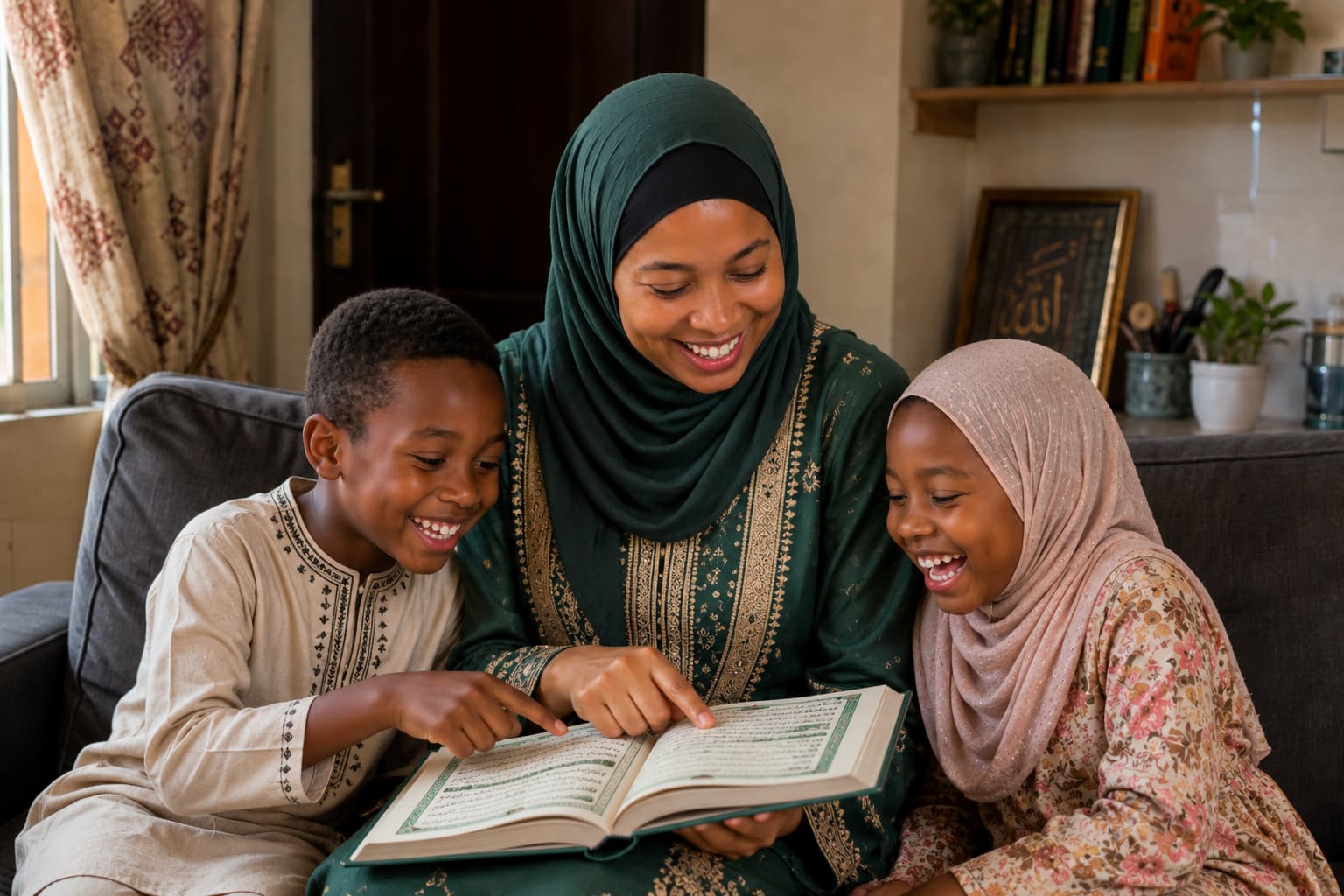
Abdurrahman was born in the Royal London Hospital in 2010. He was the most curious child I had ever seen. He memorised Surah Al-Fatiha at age four without anyone formally teaching him — he just heard it enough times and absorbed it. By primary school, teachers described him as a joy. He would remind me when Maghrib was coming in because he wanted us to pray together.
I remember thinking, in those years, that whatever I had done — I had done it right. I was wrong. Not because I had done anything wrong. But because I had no idea what was coming at twelve.
When the shift started, it was so gradual I almost missed it.
Secondary school. A new friendship group. Boys who were Muslim by name but not by practice. Nothing dramatic — no single incident I could point to. Just a slow cooling. The Qur'an app on his phone replaced by music. The prayer reminders ignored with an irritated look I had never seen on his face before. Ramadan becoming a source of complaints instead of anticipation.
His father, Yusuf, noticed before I admitted it to myself. One evening after Isha he came to me in the kitchen and said quietly: "Fatimah. He is going." Two words. I stood at the sink and could not respond. Because I knew he was right.
The confrontation that broke me happened on a Thursday evening in November.
I had asked Abdurrahman — for the third time that week — to come to Jumu'ah the following day. He looked up from his phone, and in a tone that was not rude, not shouting, just flat and tired, said: "Mum. I don't feel anything when I go there. It's just... I go because you want me to. Can we not just skip this week?"
I sent him to his room. I sat in the kitchen. And I cried in a way I had not cried since my own mother passed. Because it was not rebellion. It was honest. And I had no answer.
My aunt Rabi — my mother's older sister, who raised six children in Lagos and watched them all remain practising Muslims into adulthood — called me that same week. She said, in Yoruba: "Fatimah. The tree does not go wrong. The planting goes wrong. Go back to the roots. Find someone who understands the roots."
Before I found the answer, I tried everything the internet told me to try.
I bought every mainstream parenting book I could find. They were well-written. Compassionate. Completely silent on the specific experience of a Muslim child navigating British secondary school. The advice assumed a child whose primary struggle was self-esteem — not a child quietly making theological calculations about whether his faith was real.
I tried family counselling. Three sessions. The counsellor was warm and professional and had clearly never thought about the role of prayer in a child's psychological formation. She kept redirecting our conversations toward "autonomy" and "identity development." Not wrong. Not useful.
I tried the strict approach. No phone until after Maghrib. No going out on Fridays until after Jumu'ah. He complied. He also went completely silent for six weeks. I had managed his behaviour and lost his trust simultaneously.
I tried the soft approach. No rules. Just conversation. He was kind about it — Abdurrahman has always been kind — but he did not come to me with anything real. Politeness and distance are not connection.
I tried sending him to weekend Islamic classes. He went. He sat. He came home. Nothing changed. The problem was not information. He knew what Islam said. He had stopped feeling it.
I tried speaking to the imam at our local mosque. He gave me a du'a and told me to be patient. I was already being patient. I needed a method.
Then came Eid ul-Adha 2023 and the trip to Lagos that changed everything.
We went to visit my uncle's family in Surulere. On the third evening, sitting in the courtyard after Isha, I found myself next to an elderly man I had not met before. He was introduced to me as Ustaz Ibrahim Al-Amin — a retired Islamic scholar, seventy-three years old, who had spent forty years teaching in madrasas across West Africa and had raised seven children of his own.
I do not know what made me tell him. Perhaps it was the way he listened. Perhaps it was the fact that he was a stranger and I was tired of pretending everything was fine.
I told him about Abdurrahman. About the distance. About the failed attempts. About the Thursday evening in November. He listened without interrupting. When I finished, he was quiet for a long moment. Then he said:
"Sister Fatimah. Everything you have described — the books, the counsellor, the strict rules, the soft approach — these are all answers to a question you have not correctly identified. You are asking: how do I make my child obey? But the question your child is actually asking is: does my parent understand me? And until you answer his question, he will not answer yours."
He held up a hand — gently — and continued:
"The scholars of our tradition — Al-Ghazali, Ibn al-Qayyim, Ali ibn Abi Talib — they wrote about this. About the architecture of a child's soul. About the Veil of Shame that protects a child's conscience and how parents unknowingly destroy it. About the three stages of a child's development and why using the wrong approach at the wrong stage closes the child's heart permanently. They mapped all of this. Nine hundred years ago. And most Muslim parents today have never read a single page of it."
— Ustaz Ibrahim Al-Amin, retired Islamic scholarHe talked for two hours. I listened to every word. When I went to bed that night, I wrote down everything I could remember. Five frameworks. Five specific concepts from the classical Islamic scholarly tradition that explained — with a precision that no modern parenting book had come close to matching — exactly what had been happening in my home.
I started applying them the week I returned to London.
The first framework Ustaz Ibrahim had described was something Al-Ghazali called the Veil of Shame — the idea that a child is born with an internal conscience that keeps their behaviour in check because they care about how their parents see them. And that this veil can be quietly destroyed, not by neglect, but by the very methods most parents use to protect it.
I had been correcting Abdurrahman in front of his cousins during family gatherings. Small things — a tone I didn't like, a response that felt disrespectful — but public corrections. Al-Ghazali was unambiguous about what this does to a child's dignity. It does not add shame. It removes it.
I stopped. I changed the ratio entirely. For every correction — seven genuine positive acknowledgements. The 70/30 Rule. By day ten, Abdurrahman came into the kitchen while I was making dinner and — without being asked — helped set the table. He didn't say anything. Neither did I. But I noticed.
The real moment came at the end of the third week.
It was a Sunday morning. Yusuf and I had prayed Fajr together. We came downstairs and found Abdurrahman in the living room, prayer mat already laid out, praying Fajr on his own. Nobody had woken him. Nobody had reminded him. Nobody had made a rule about it.
Yusuf looked at me across the room. He reached over and squeezed my hand. Later that day he said: "Fatimah. Whatever you have been doing differently these past weeks — it is working. He is coming back."
I cannot tell you I did not cry. Because I did.
It was not just us.
At that same gathering in Lagos, three other mothers had overheard parts of my conversation with Ustaz Ibrahim. Two of them — Amina from Ikeja and Halima from Abuja — had asked me to send them notes. Six weeks later, Amina messaged me to say that her daughter, who had stopped wearing hijab to school, had put it back on without being asked. Halima said her son — who had not spoken to her properly in eighteen months — had come to her one evening and apologised for something that happened two years ago.
I realised then that what Ustaz Ibrahim had given me was not advice. It was a system. A complete, tested, fourteen-hundred-year-old system for understanding how a child's soul works. And I realised I could not keep it to myself.
After I got home from Lagos, the messages started. From sisters in my WhatsApp groups. From mothers at the school gates who had seen something change in Abdurrahman and asked me what happened. I was answering the same questions over and over again. I could not do each conversation justice in a voice note.
So I sat down and wrote everything out. Every framework Ustaz Ibrahim had shared. Every step. The scholarly sources behind each one. The practical application for British Muslim parents specifically — because raising a Muslim child in this country adds layers that parents elsewhere do not face in the same way.
I put everything inside one complete, easy-to-read guide. Introducing...
The Classical Islamic Parenting Guide for the Modern Muslim Home
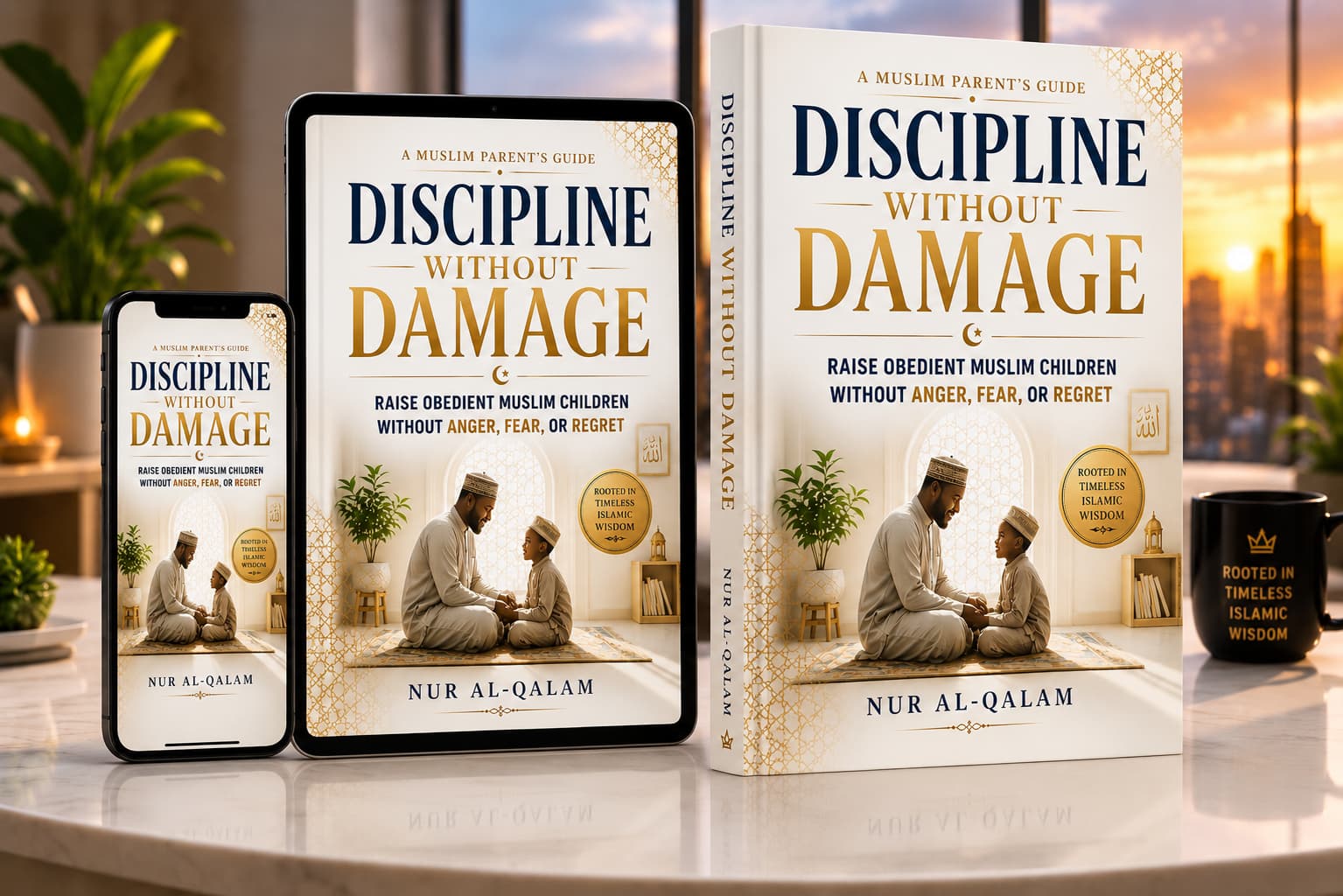
Inside this e-guide, you'll discover:
- The Veil of Shame — and how most parents unknowingly destroy it — Al-Ghazali's framework for why some children lose the conscience that keeps them in check, and the six-step Return, Repair, Rebuild method for correcting without crushing — Pg. 4
- The 7-7-7 Rule from Ali ibn Abi Talib (RA) — The three stages of a child's development and why using the discipline approach during the friendship stage is the single most common reason British Muslim teenagers shut down completely — Pg. 12
- The Wrong Room and Al-Malal: The Soul Crusher — Ibn al-Jawzi's concept of the deep resentment that builds when a child is pushed beyond their natural capacity — and how to recognise if your child is already there — Pg. 16
- Finding the Fath — your child's God-given opening — Ibn al-Qayyim's method for discovering the lane Allah prepared specifically for your child, including the Strength Log exercise that reveals patterns most parents miss entirely — Pg. 18
- The Sacred Vault — why teenagers stop confiding in parents — The Islamic concept of Sirr in practice, and the Twenty-Minute Listen method that reopens communication with a child who has gone quiet — Pg. 22
- The Overhead Praise Technique — A counterintuitive practice from the classical tradition that builds a child's confidence at a level direct praise can never reach — especially effective for British Muslim children navigating dual identities — Pg. 13
- What to say when nothing seems to work — Scripts for the moments that cause most parents to freeze: when your child says "I hate you," when they refuse salah, when you have already lost your patience and need to repair the damage — Pg. 8
And the best part? You do not need a psychology degree, a perfect track record, or hours of free time. This is the same classical method that worked for me, and has now worked for over 280 Muslim parents I have quietly shared it with — in Nigeria, the UK, Kenya, Canada, and the US.
"Wallahi sis, I've read every parenting book going and none of them spoke to my situation as a British Muslim mum. The Veil of Shame chapter alone explained three years of confusion in twenty minutes. My daughter asked to go to the mosque last Friday. On her own. I nearly fell off my chair. Barakallahu feeki for writing this."
"As a dad I was sceptical. My wife bought it and I read it over her shoulder on the train. I couldn't stop. The 7-7-7 Rule made me realise I have been in the wrong stage with my son for two years — trying to discipline a boy who needed a friend. We spoke properly for the first time in months last weekend."
"The Script Library companion guide is what I didn't know I needed. I always knew the theory — be patient, listen, don't react — but in the actual moment I'd freeze. Having the words ready for specific situations changed everything practically. It's on my phone. I check it before difficult conversations with my 13-year-old."
"Honestly I was expecting another generic parenting guide with Islamic quotes dropped in. This is completely different. The scholarship behind it is real. My son was in what Fatimah calls the Wrong Room — I had been pushing him academically for years and he had completely switched off. We changed direction three weeks ago. He is actually trying again."
"The Sacred Vault chapter broke me in the best possible way. I tried the Twenty-Minute Listen — just listened, no advice, no correction. My daughter talked for forty minutes and told me things she'd been carrying since Year 9. That was four weeks ago. She now comes to me. MashaAllah."
Just So You Know... Putting This Guide Together in an Easy-To-Read Format Cost Me Over £1,200.
- Research and translation of original classical Arabic scholarly texts — £280
- Professional editor to make the content accessible without losing accuracy — £320
- Islamic studies consultant to verify every scholarly reference — £250
- Design and formatting for all devices — £180
- Twelve British Muslim parent beta readers who tested every framework — £170
I am not going to charge you £1,200...
I will not charge you £600...
Not even £100...
In fact you will not even pay £85 — the full value of everything included.
A completely fair price for this complete bundle would be £85.
But today, for the first 50 families, your investment is just...
WAIT! I Have FREE Gifts For You...
If you are among the first 50 families, you will receive these incredible companion guides alongside your copy — Today Only.
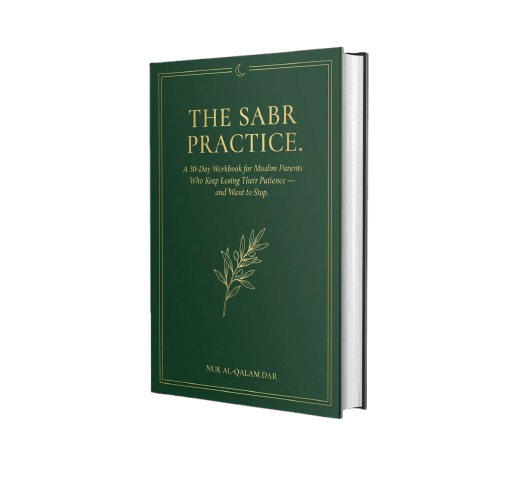

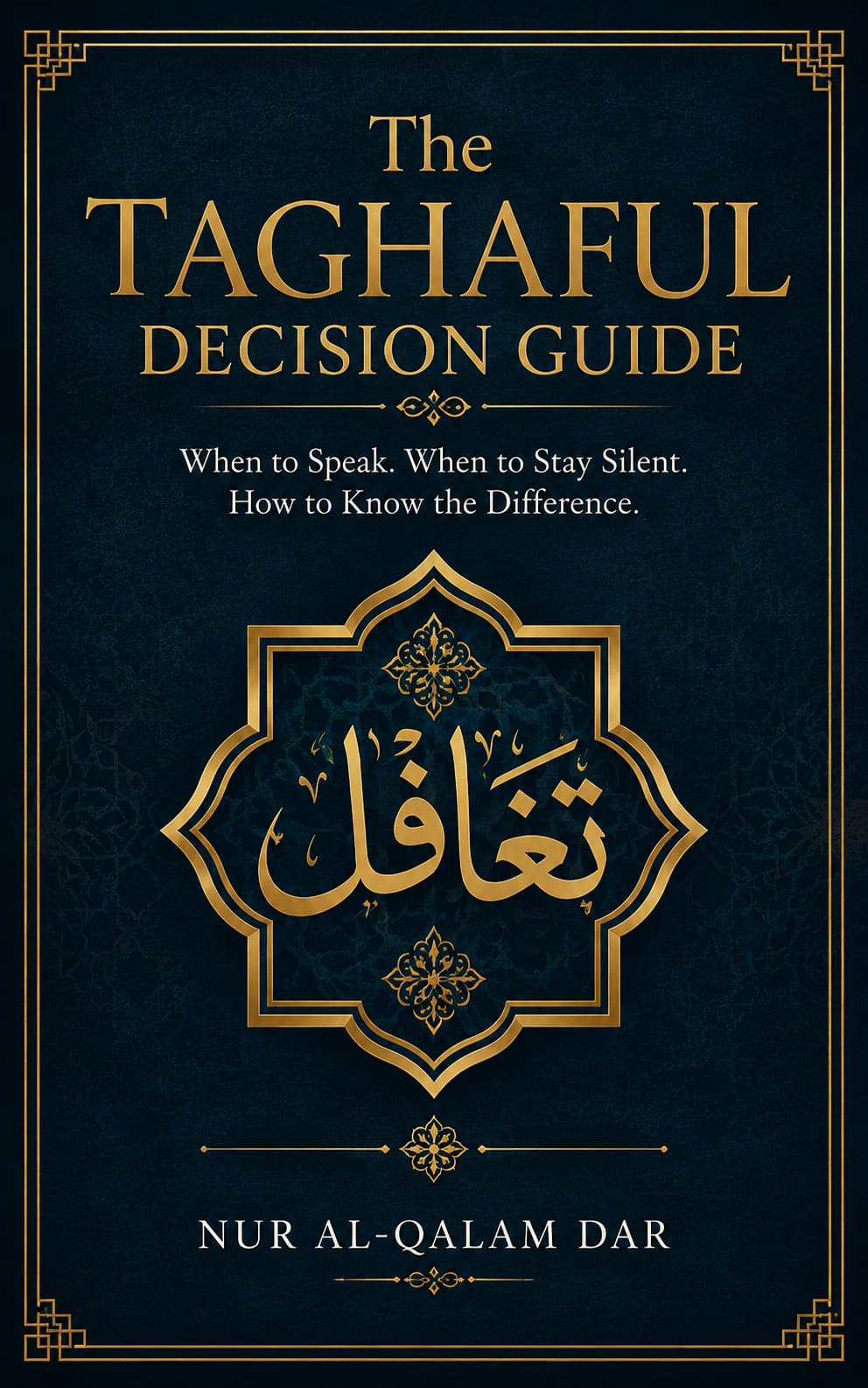
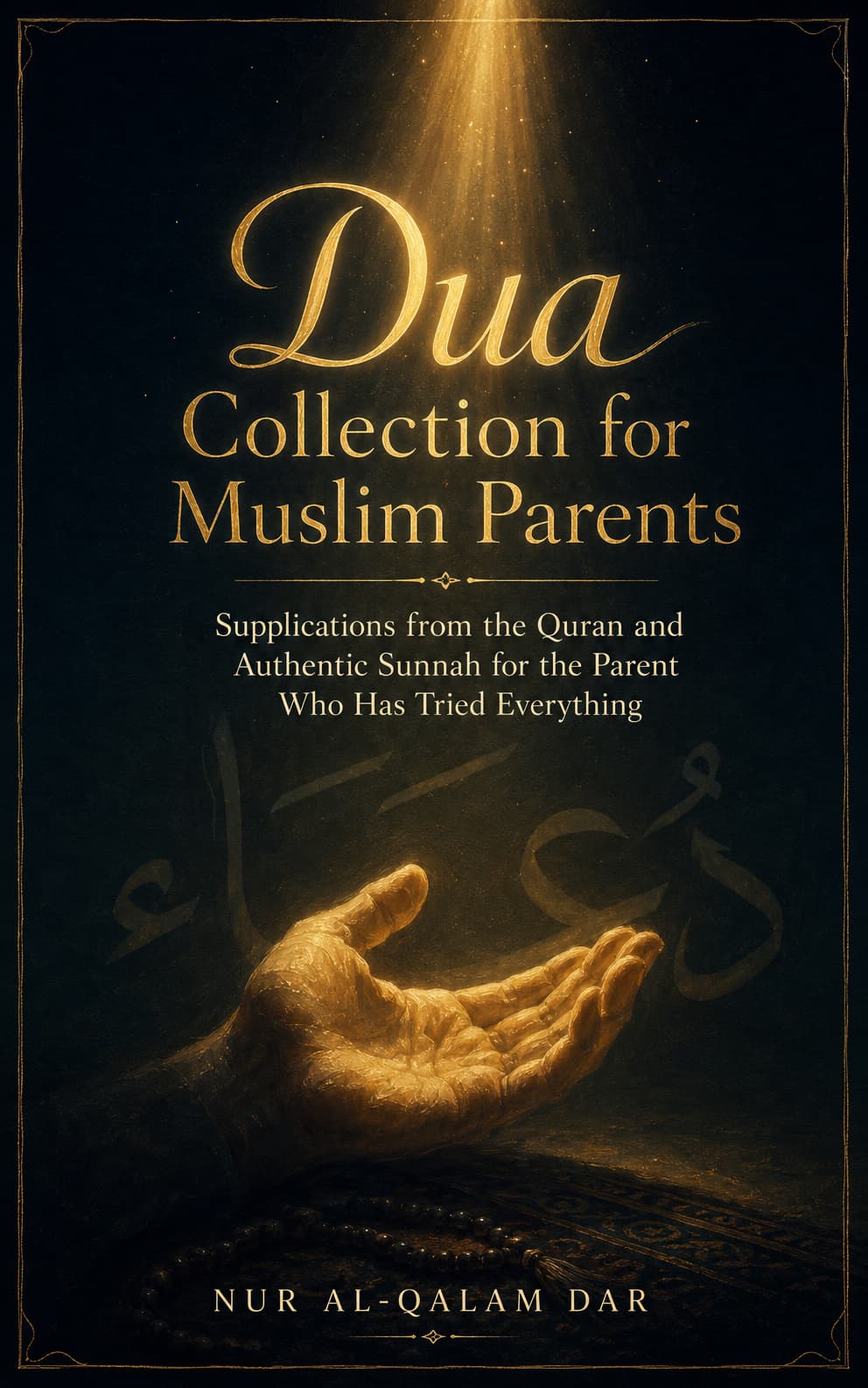
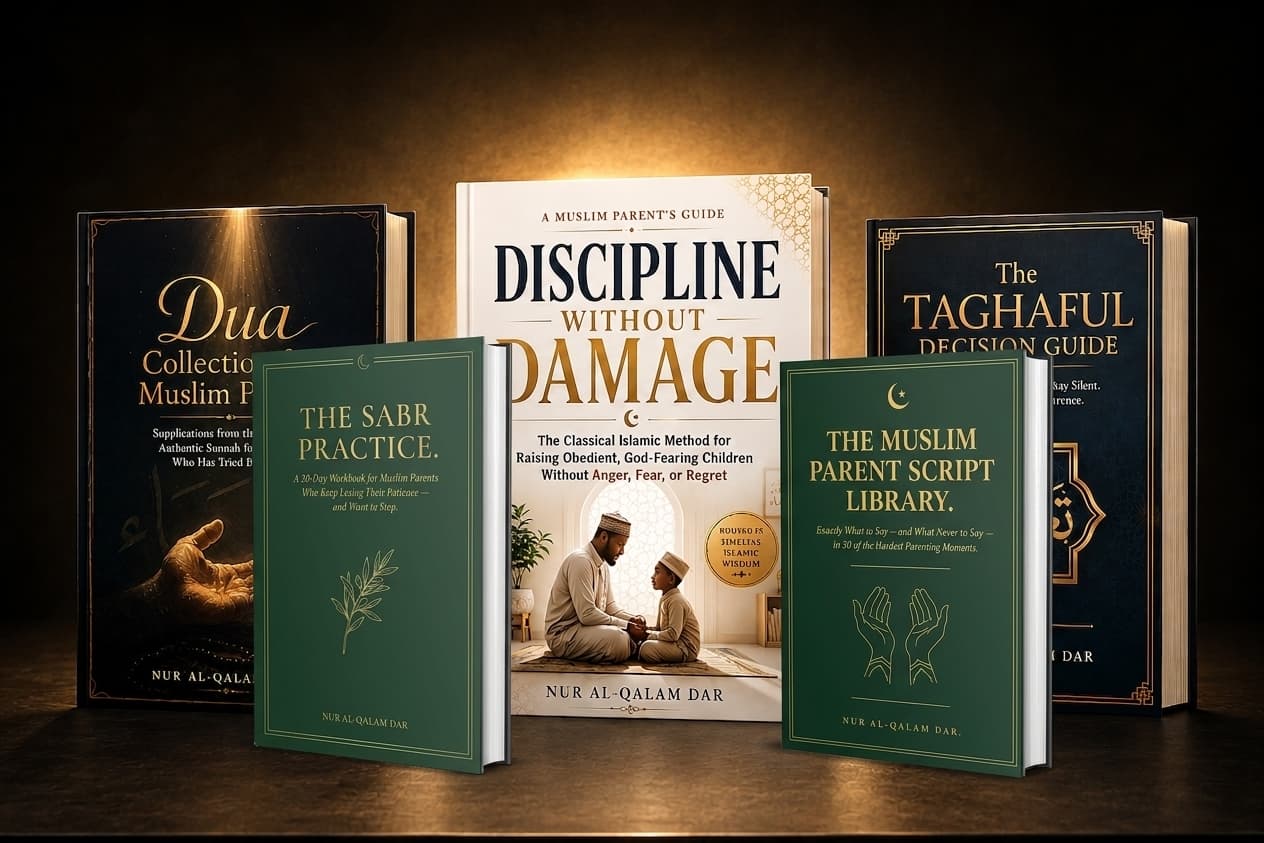
Look at what has been happening since we opened this offer to British Muslim families...
37 families have already claimed their spot at this founding price... only 13 spots remain before the bonuses are removed and the price increases.
Bear in mind — you are not the only one viewing this page right now.
I Want My Spot — Get The Complete Bundle Now → £27 · 50 founding spots only · Instant deliveryStill Unsure? Here Is My Bold, Risk-Free Promise.
I completely understand hesitation. You have probably spent money on parenting books and courses before that did not deliver. I know I have.
So here is what I am offering you: read Discipline Without Damage and apply at least two of the five frameworks for 30 days. If after 30 days you genuinely feel that nothing in this bundle gave you a single practical tool that improved your relationship with your child — email me and I will refund every penny.
No forms. No questions. No awkward back-and-forth. Just a full refund, the same day I receive your message. I am that confident in what is inside this guide. Because it worked for me. And it has worked for every parent I have shared it with who actually applied it.
Yes — I Want The Complete Bundle Risk-Free 30-day money-back guarantee · £27 · Instant delivery"I have three teenagers and I was at my wit's end. My eldest had basically stopped engaging with the family completely. Three weeks after reading this, she sat down to eat with us voluntarily on a Friday evening and asked her dad about his day. It sounds small. It is not small. JazakAllahu khayran Fatimah."
"As a father I sometimes feel like these parenting resources are written for mothers. This one speaks to both parents equally. The 7-7-7 Rule was aimed directly at me — I was trying to 'discipline' a 16-year-old who actually needs me to be his friend right now. The shift in our relationship since I changed my approach has been remarkable."
"The Sabr Practice workbook that comes with it is what made the difference practically. The book gives you the understanding. The workbook makes you actually do it every day. By day 12 I noticed I was responding differently to my son without having to think about it. It had just become how I parented."
"My husband — who never reads parenting books — read it in two sittings. We are applying it together now. Our home feels different. Calmer. More connected. AllahummaBarik."
"My daughter stopped wearing hijab to school in Year 10. The chapter on Al-Malal explained exactly what I had unknowingly created. I stopped pushing. Started the Twenty-Minute Listen. Six weeks later she put it back on. She told me she wanted to — that it felt like hers, not mine."
You Have Two Choices Right Now.
✅ Option 1 — Take Action Today
Get Discipline Without Damage and all five companion guides for £27. Apply the classical Islamic frameworks. Start with just one — the Twenty-Minute Listen, or the Overhead Praise Technique, or the 70/30 Rule. Give it two weeks. See what shifts. Reclaim the relationship with your child before the distance becomes permanent.
❌ Option 2 — Close This Page
Go back to the books that don't speak to your situation. The counsellors who have never thought about the role of salah in a child's psychological formation. The approach that has been producing the same results for the past year. Perhaps Allah put this page in front of you for a reason. Perhaps you will never know.
May Allah bless your home and make your children among the righteous.
— Fatimah · Muslim Parenting Matters · Nur Al-Qalam Dar
Share Your Experience