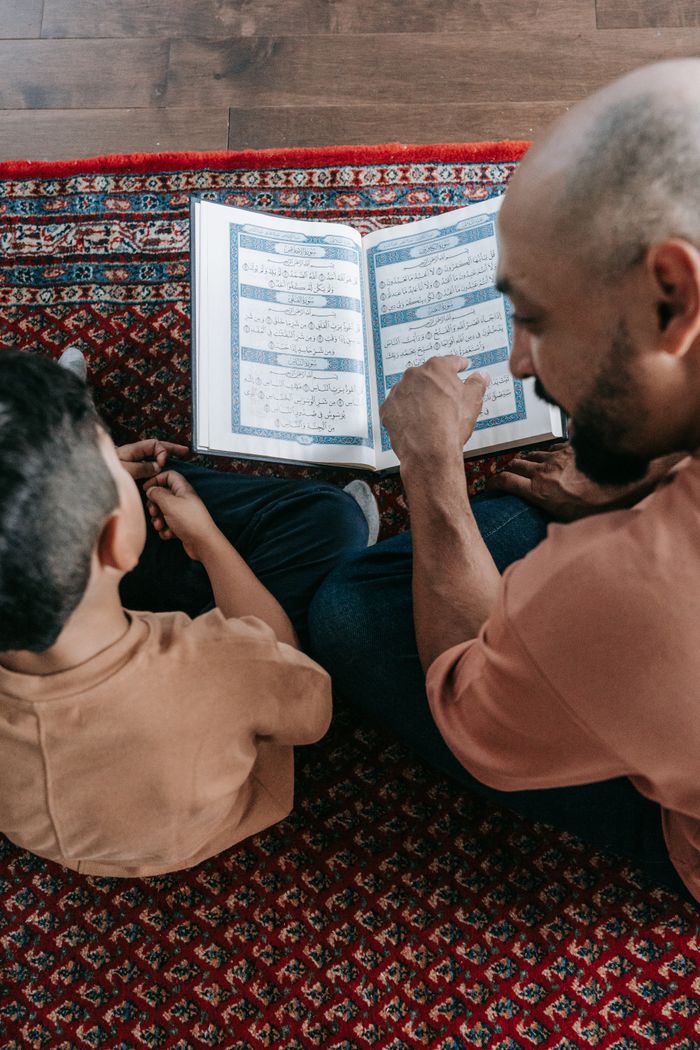

Islamic parenting is about more than teaching children to memorise duas, attend Qur’an classes, or follow a list of rules. It’s about helping them develop a relationship with Allah, good character, a sense of responsibility, and habits that carry into everyday life.
For Muslim parents, this responsibility is an amanah. The Prophet ﷺ described each person as a shepherd who is responsible for those under their care, including parents and their children.
The good news is that Islamic parenting doesn’t require perfect parents or a perfect home. It starts with small, consistent choices in the way you speak, teach, correct, encourage, and live your own Islam.
In this guide, you’ll discover 15 practical Islamic parenting principles that can help you raise children with strong faith and character while building a healthier relationship with them along the way.
What Is Islamic Parenting?
Islamic parenting is the process of raising children according to the guidance of the Qur’an and Sunnah while nurturing their faith, character, manners, emotional development, and sense of responsibility.
The Qur’an gives parents a clear sense of responsibility toward their families. Allah says:
“O believers! Protect yourselves and your families from a Fire…”
This responsibility isn’t limited to telling children what halal and haram. It includes teaching them who Allah is, helping them understand why they worship Him, modelling good character, teaching them Salah, correcting mistakes, and creating an environment where Islam is lived rather than simply discussed.
Islamic parenting therefore combines faith, example, teaching, discipline, mercy, consistency, and dua.
Why Is Islamic Parenting Important?
Children learn from what surrounds them.
They hear what their parents say, but they also notice how their parents behave. They notice whether Salah is treated as an interruption or as something valuable. They notice how their parents speak when they’re frustrated. They notice whether mistakes are met with humiliation or used as opportunities to learn.
This is why Islamic parenting begins with the parent.
The Prophet ﷺ said that each person is responsible for those under their care.
The Qur’an also gives us a beautiful example in the advice of Luqman to his son. His teaching included Tawhid, prayer, good conduct, humility, and patience.
The goal isn’t simply to raise children who obey instructions while their parents are watching. The deeper goal is to help them develop an internal sense of faith and character that guides their choices even when nobody is watching.
15 Practical Islamic Parenting Tips
1. Lead by Example Before You Give Instructions
Children learn a great deal by watching.
You can repeatedly tell your child to speak politely, control their anger, pray on time, tell the truth, or show gratitude. But your own behaviour gives those instructions credibility.
If you want your children to value Salah, let them regularly see you treating Salah as important.
If you want them to speak respectfully, pay attention to the way you speak to them and to other people.
If you want them to admit their mistakes, show them that adults can acknowledge their own mistakes too.
This doesn’t mean you have to become perfect before you can teach your children. It means your own behaviour should support the lessons you’re trying to teach.
Practical step: Choose one Islamic quality you want your child to develop and deliberately model it throughout the week.
2. Build Your Child’s Relationship With Allah
Islamic parenting isn’t only about teaching children rules.
Children need to know who Allah is and why they should love, worship, trust, and turn to Him.
Talk about Allah naturally during everyday moments.
When your child sees something beautiful, talk about Allah’s creation. When something good happens, teach them to say Alhamdulillah. When they’re worried, remind them that they can make dua and turn to Allah.
This helps faith become connected to ordinary life rather than something that only appears during Qur’an lessons or religious classes.
Luqman’s advice to his son begins with Tawhid. He teaches his son not to associate partners with Allah.
That foundation matters.
3. Make Islam Part of Everyday Family Life
Children shouldn’t experience Islam as a subject that only exists at the mosque or in an Islamic class.
Let Islamic practices become part of the rhythm of your home.
You might:
- Make dua together before important activities.
- Read a short portion of Qur’an together.
- Pray together when possible.
- Discuss a lesson from a prophetic story.
- Say Bismillah before eating.
- Say Alhamdulillah after receiving something good.
- Talk about gratitude when something goes well.
- Discuss Islamic manners when everyday situations arise.
These small moments accumulate.
Over time, your child begins to see Islam as part of life rather than a separate activity.
4. Teach Salah Gradually and Consistently
Salah is one of the most important habits Muslim parents help their children develop.
The Qur’an presents Luqman’s advice to his son with prayer among the central instructions he gives him: “O my dear son! Establish prayer…”
The Prophet ﷺ also instructed parents to command their children to pray at seven.
That means Salah shouldn’t suddenly appear in a child’s life as a set of demands when they’re older.
Start by helping them become familiar with prayer.
Let young children watch you pray. Allow them to join when they want to. Teach them the movements and words gradually. Create routines around prayer and explain why Muslims pray.
As they grow, increase their responsibility appropriately.
The aim is to help prayer become a familiar part of their identity and daily routine.
Practical step: Instead of turning every missed prayer into a long lecture, focus on building a predictable prayer routine and helping your child understand the purpose of Salah.
5. Prioritise Character Alongside Worship
A child can learn many Islamic facts without developing good character.
Islamic parenting should therefore include both worship and akhlaq.
Teach children:
- Honesty
- Kindness
- Patience
- Gratitude
- Humility
- Respect
- Responsibility
- Forgiveness
- Keeping promises
- Caring for others
The Qur’anic advice of Luqman includes prayer, encouraging good, patience, humility, and appropriate conduct.
Look for opportunities to connect these values to everyday situations.
If your child hurts a sibling, don’t stop at “Say sorry.” Explain why hurting others is wrong and what it means to repair the relationship.
If your child lies, address the behaviour while teaching the value of honesty.
Character grows through repeated practice.
6. Correct Behaviour Without Destroying the Relationship
Discipline is part of parenting, but correction doesn’t have to mean humiliation, insults, or uncontrolled anger.
The Prophet ﷺ showed compassion toward children. In one authentic narration, when a man said he had never kissed any of his children, the Prophet ﷺ said that whoever does not show mercy will not be shown mercy.
This gives Muslim parents an important principle: mercy belongs in the parent-child relationship.
When correcting your child:
- Address the behaviour.
- Explain what was wrong.
- Explain what they should do instead.
- Allow them to correct it.
- Follow through consistently when a consequence is appropriate.
A child can understand that a behaviour is unacceptable while still knowing that they are loved.
7. Don’t Make Fear the Main Reason Your Child Obeys
Fear can produce outward compliance, but Islamic parenting should aim for something deeper.
You want your child to gradually understand why something matters.
Instead of making every lesson:
“Do this because I said so.”
also explain:
“This is what Allah loves.”
“This is how Muslims treat other people.”
“This protects you.”
“This is why honesty matters.”
Children won’t understand everything immediately. That’s fine.
As they grow, explanations become more meaningful.
The goal is to nurture conscience, not simply dependence on parental surveillance.
8. Create a Home Where Children Can Ask Questions
Children are naturally curious.
They may ask:
“Where is Allah?”
“Why do we pray?”
“Why can’t I do that?”
“What happens after we die?”
“Why do Muslims fast?”
Some questions can feel difficult, especially when you’re tired.
Try not to make curiosity itself something your child fears.
If you don’t know the answer, you can say:
“That’s a good question. Let me find out so I can give you the right answer.”
That response teaches your child that seeking knowledge is good.
It also helps preserve trust.
9. Teach Through Stories
Children often remember stories long after they forget instructions.
The Qur’an itself contains numerous stories that teach faith, patience, courage, obedience, repentance, and reliance upon Allah.
You can introduce children to stories of the Prophets and other figures mentioned in the Qur’an and authentic Sunnah.
But don’t stop at telling the story.
Ask:
What can we learn from this?
What would you have done?
How did this person respond when things became difficult?
How can we practise that quality at home?
That turns storytelling into character education.
10. Give Your Children Responsibilities
Islamic parenting also involves teaching children to become responsible people.
Give them age-appropriate responsibilities at home.
A young child might put away toys.
An older child might help prepare meals, keep their room organised, assist younger siblings, or take responsibility for certain household tasks.
Connect responsibility with Islamic values such as amanah.
Explain that being trustworthy isn’t only about big promises. It includes taking care of the small responsibilities Allah and the family have placed in our care.
11. Praise Good Character, Not Only Achievement
Children need encouragement.
But try not to make praise revolve entirely around grades, trophies, appearance, or accomplishments.
Notice character.
Say things like:
“I noticed you told the truth even though it was difficult.”
“That was kind of you.”
“You were patient with your brother.”
“I liked how you helped without being asked.”
Specific praise teaches children which qualities your family values.
It also helps them understand that being a good Muslim isn’t measured only by what they achieve.
12. Spend Meaningful Time With Your Children
Islamic parenting isn’t only about instruction.
Relationship matters.
Make time to talk, play, eat together, walk together, read together, or simply listen.
Your child may remember a ten-minute conversation much longer than a thirty-minute lecture.
Use ordinary moments to understand what’s happening in their world.
Ask about their friends.
Ask what they’re learning.
Ask what they’re worried about.
Ask what they enjoyed that day.
When children feel that their parents genuinely want to know them, guidance becomes easier to receive.
13. Be Careful With Anger
Parents get frustrated. That’s part of being human.
But repeated uncontrolled anger can change the atmosphere of a home.
If you feel yourself becoming overwhelmed, pause before responding when possible.
Lower your voice.
Give yourself a moment.
Return to the conversation when you’re calmer.
You can also model healthy repentance. If you lose your temper and speak unfairly, apologise.
That doesn’t weaken your authority.
It teaches your child that Muslims are accountable for how they treat others and that mistakes can be acknowledged and repaired.
14. Make Dua for Your Children
Parents can teach, guide, encourage, and provide opportunities, but ultimately guidance belongs to Allah.
Make dua for your children regularly.
The Qur’an records the dua:
“My Lord! Grant me from among the righteous.” (Qur’an 37:100)
Another beautiful dua asks:
“Our Lord! Grant us from our spouses and offspring comfort to our eyes and make us an example for the righteous.” (Qur’an 25:74)
You can also make personal dua in your own words.
Ask Allah to give your children iman, good character, beneficial knowledge, righteous companionship, protection from harm, and steadfastness.
And make dua for yourself as a parent.
You need guidance too.
15. Be Consistent, Patient, and Realistic
One of the biggest mistakes parents can make is expecting immediate transformation.
Your child may pray enthusiastically for a week and then become distracted.
They may show excellent manners today and argue with their sibling tomorrow.
They may memorize a dua and forget it later.
That’s part of learning.
Islamic parenting is a long process of teaching, modelling, reminding, correcting, encouraging, and trying again.
Luqman’s advice to his son includes patience alongside prayer and encouraging good.
Consistency doesn’t mean reacting identically to every situation. It means your family values remain clear even as your approach changes according to your child’s age, personality, and circumstances.
The Role of Parents in Raising Muslim Children
Islamic parenting starts with recognising that children are a responsibility entrusted to parents.
The Prophet ﷺ described parents as responsible for those under their care.
The Qur’an also commands believers to protect themselves and their families.
This gives parenting a bigger purpose.
You’re not simply trying to make your child behave well at home.
You’re helping another human being develop a relationship with Allah, understand right from wrong, develop good character, and eventually make responsible choices independently.
That takes time.
It also requires parents to keep learning.
What Does Effective Islamic Parenting Look Like?
Effective Islamic parenting doesn’t mean your children will never misbehave.
It doesn’t mean they’ll never question you, forget Salah, lose their temper, or make mistakes.
Instead, effective Islamic parenting creates an environment where children are repeatedly exposed to:
- Faith
- Good examples
- Clear boundaries
- Compassion
- Knowledge
- Accountability
- Encouragement
- Healthy correction
- Dua
- Consistency
The objective is long-term growth.
A child who makes a mistake and learns how to correct it is learning.
A child who asks a difficult question and receives a thoughtful answer is learning.
A child who struggles with Salah but gradually develops a routine is growing.
Parenting is a process, not a one-time lesson.
Common Islamic Parenting Mistakes to Avoid
Even parents with the best intentions can fall into patterns that make parenting harder.
Turning every mistake into a religious lecture
Not every small mistake requires a long reminder about punishment or the Hereafter. Sometimes a short correction is enough.
Comparing siblings
Comparisons can create resentment and damage relationships between children.
Instead of saying, “Why can’t you be more like your brother?” focus on the behaviour you want the individual child to improve.
Expecting adult-level understanding from children
Children develop gradually.
Teach according to their age and ability.
Focusing only on outward obedience
A child can obey because they’re afraid of being punished while still not understanding the value behind the behaviour.
Teach the heart alongside the action.
Correcting more than you connect
If most interactions with your child involve instructions and corrections, the relationship can become strained.
Make room for affection, conversation, play, encouragement, and shared experiences.
A Simple Islamic Parenting Routine You Can Start Today
You don’t need to completely redesign your family life overnight.
Start small.
Morning
- Begin the day with the remembrance of Allah.
- Encourage your child to make their morning duas.
- Set one simple intention for good character that day.
During the day
- Look for natural opportunities to teach Islamic manners.
- Praise one positive behaviour.
- Spend some uninterrupted time with your child.
Around Salah
- Pray together when possible.
- Help your child prepare for prayer.
- Explain the meaning and purpose behind Salah.
Evening
- Read or tell a short Islamic story.
- Ask your child about their day.
- Talk about one thing they’re grateful for.
- Make dua together.
You don’t have to do everything perfectly.
Small habits repeated consistently can become part of family culture.
Frequently Asked Questions About Islamic Parenting
What is Islamic parenting?
Islamic parenting is the process of raising children according to the Qur’an and Sunnah while nurturing their faith, character, manners, knowledge, responsibility, and relationship with Allah.
How can I raise my child to love Islam?
Start by making Islam a lived part of family life. Model your faith, speak about Allah naturally, make worship meaningful, show mercy, teach through stories, answer questions, and help your child associate Islam with guidance, purpose, worship, and good character.
How should Muslim parents discipline their children?
Parents should correct behaviour with wisdom, clear boundaries, consistency, and mercy. Discipline should teach the child what is right and help them develop responsibility rather than relying only on fear or humiliation.
How can I teach my child Salah?
Introduce Salah gradually, let children observe and participate, teach the movements and words step by step, create consistent routines, and explain why Muslims pray. The Prophet ﷺ instructed parents to command their children to pray at seven years of age.
What if my child keeps making the same mistake?
Keep teaching and correcting while looking at whether your approach needs to change. Children often need repeated instruction before a behaviour becomes a habit. Combine boundaries with patience, encouragement, and dua.
Should parents make dua for their children?
Yes. The Qur’an records several beautiful duas for righteous offspring, including the dua of Ibrahim عليه السلام for righteous children and the dua in Qur’an 25:74 asking Allah to make spouses and offspring a comfort to the eyes.
Final Thoughts
Raising Muslim children is a long journey.
There will be days when you feel like you’re making progress and days when you wonder whether your child is listening at all.
Keep teaching.
Keep modelling.
Keep making dua.
Keep building the relationship.
Islamic parenting isn’t about producing children who never make mistakes. It’s about nurturing children who know Allah, understand their responsibilities, recognise right from wrong, and gradually learn to make good choices for themselves.
Start with one change today.
Perhaps pray together.
Perhaps have a conversation about Allah.
Perhaps apologise for yesterday’s anger.
Perhaps spend ten quiet minutes listening to your child.
Small moments can become lasting lessons.
And with Allah’s help, those lessons can become part of the character your child carries throughout life.
A Practical Next Step for Parents
If you’re struggling with a specific parenting challenge such as discipline, obedience, or helping your child develop a consistent relationship with Salah, don’t try to change everything at once.
Choose one area.
Learn about it.
Apply one practical change.
Observe what happens.
Then adjust and continue.
For Muslim parents who want deeper, step-by-step guidance, explore our practical parenting resources designed to help you handle common challenges with greater confidence and wisdom.